The Injury Gap™: When Injury and Understanding Don’t Match
The Injury Gap™ is the space between the traumatic injury a person actually sustains and the injury that is ultimately recognized, measured, documented, connected, explained, and understood.
In complex motor vehicle injury cases, important evidence may exist across diagnostic imaging, spinal biomechanics, physical examination findings, medical records, symptoms, functional limitations, and the course of recovery. Yet those findings do not automatically create a clear explanation of the injury.
The Injury Gap™ framework explores why traumatic injury can be documented and still remain misunderstood—and how medical evidence can be identified, evaluated, correlated, and synthesized to better understand what was injured, how the injury occurred, what objective evidence supports it, how it affected function, and why recovery may not have followed the expected course.
Developed by Dr. Gary Lee, D.C., The Injury Gap™ applies principles of traumatic injury evaluation, spinal biomechanics, diagnostic imaging, functional assessment, and forensic injury analysis to one central objective: making traumatic injury understandable.
The Injury Gap™ Articles
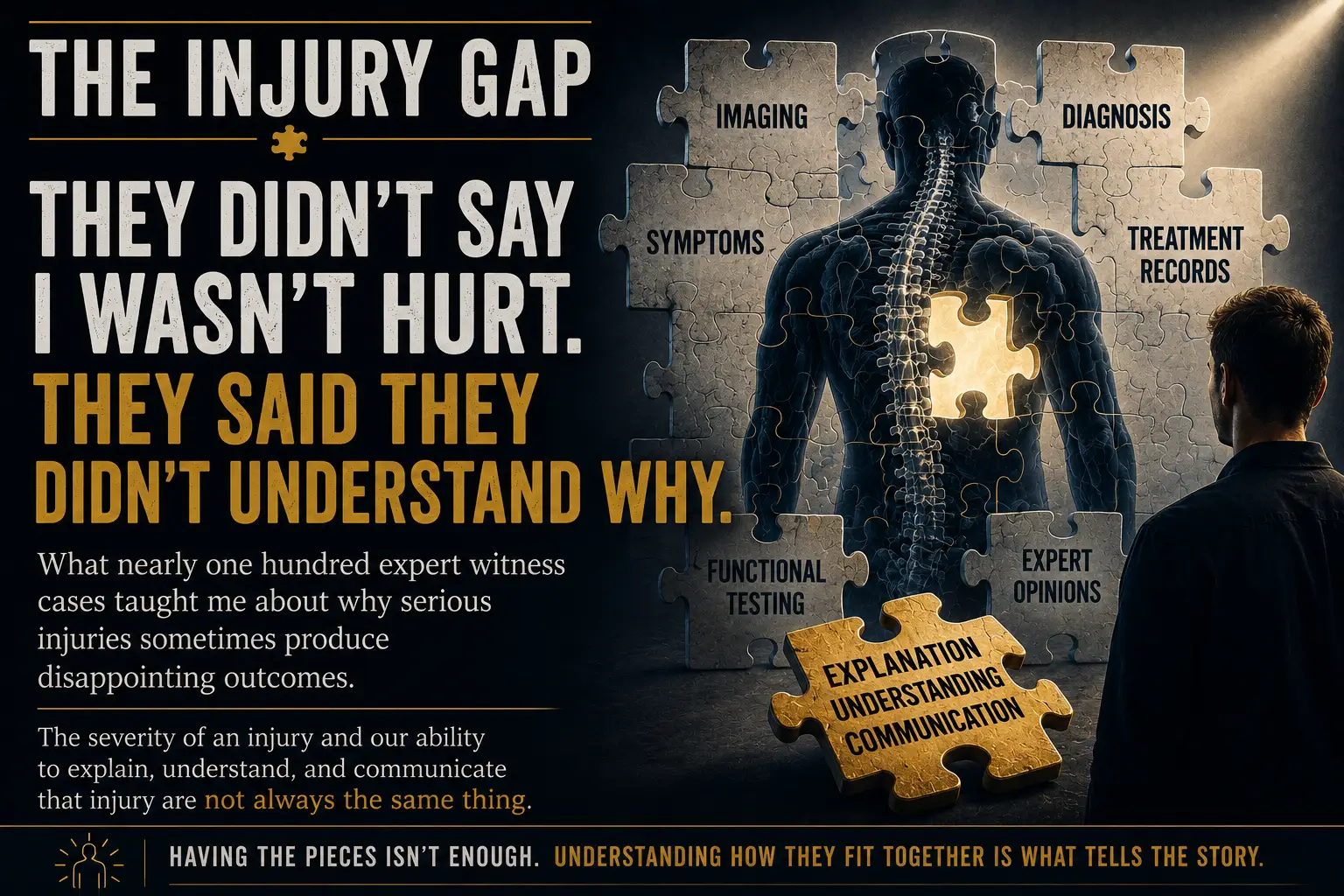
They Didn't Say I Wasn't Hurt. They Said They Didn't Understand Why.
What nearly 100 expert witness cases taught me about the difference between documenting an injury and making that injury understandable.
READ ARTICLE →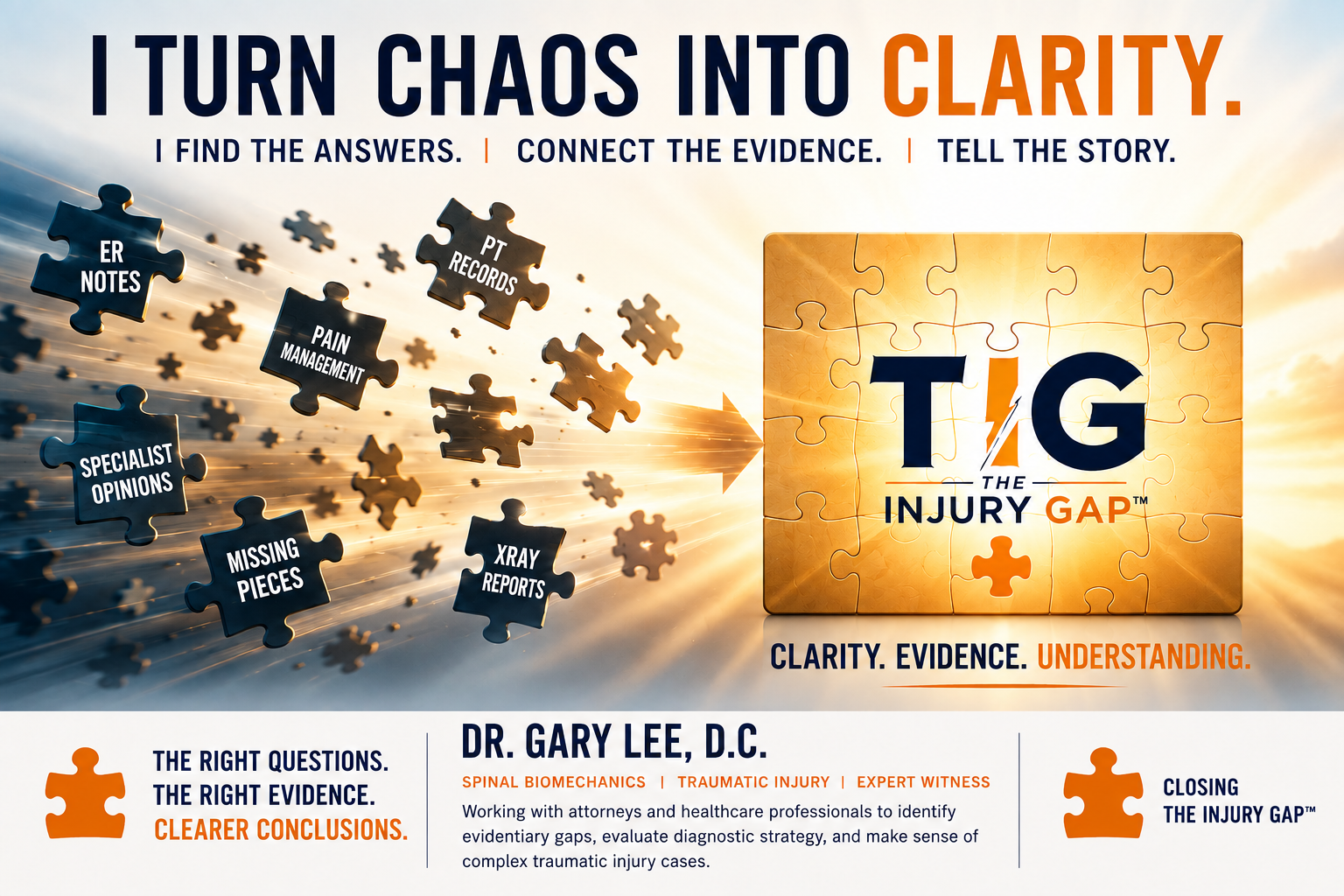
The Evidence Was There. Nobody Connected It.
A case can contain extensive medical evidence and still lack a clear explanation of why the patient remains injured.
READ ARTICLE →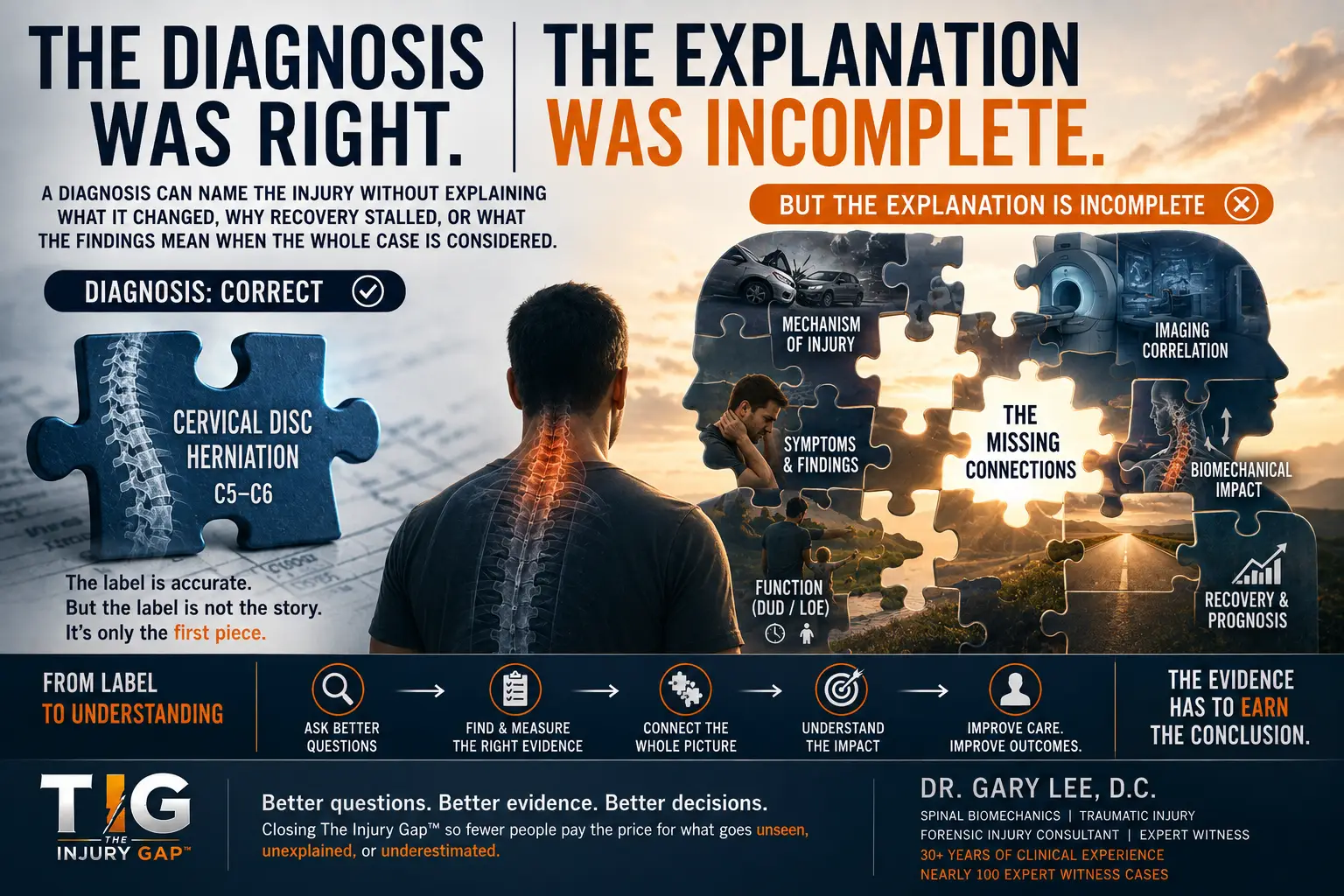
The Diagnosis Was Right. The Explanation Was Wrong.
A diagnosis can identify the injury without explaining what changed, why recovery stalled, or what the findings mean when the whole case is considered.
READ ARTICLE →